

Why We Chose Libra
Few novels take on as much risk as Libra. With Libra, Don DeLillo wrote more than a novel that references a real historical event. He wrote a detailed, invented account of the inner life of Lee Harvey Oswald and the conspiracy DeLillo imagines behind the assassination of President Kennedy, publishing it in 1988 while plenty of people who lived through the event were still very much alive.
That risk is exactly why the book belongs in our collection. DeLillo approaches the historic figure of Oswald as much more than a simple villain or a blank cipher. He builds him as a man pulled between his own convictions and forces he barely understands, shaped by a chaotic childhood, a stint in the Marine Corps, and a defection to the Soviet Union that never gave him what he wanted. Running alongside Oswald's story is a fictional account of intelligence operatives constructing a plot that eventually intersects with his life. DeLillo alternates between these threads with total control and the structure itself becomes an argument about how individual lives get absorbed into larger, uncontrollable systems.
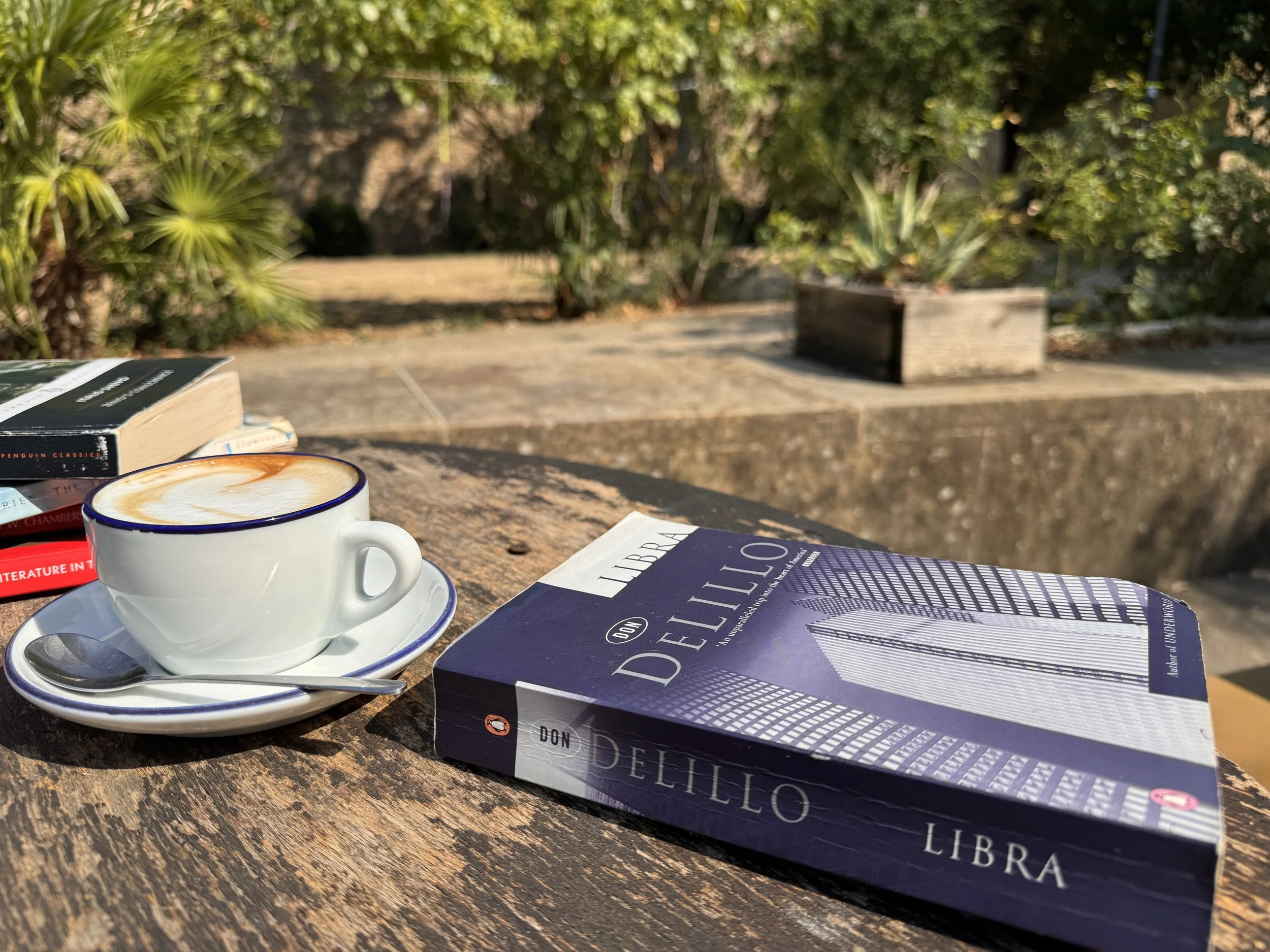
We think Libra is essential reading for anyone interested in how fiction can engage seriously with contested history. DeLillo is not claiming to tell readers what actually happened. He is asking what it would take, imaginatively, to make sense of an event that resists sense. That question runs through the rest of his career, from White Noise to Underworld, but Libra is where he applies it most directly to a single, real, unresolved historical wound.
The novel also rewards close study of craft. The way DeLillo moves between Oswald's biography and the parallel conspiracy plot gives readers a clear, teachable example of how structure controls meaning in a novel. Few books make the mechanics of narrative order this visible while still working as a genuinely gripping story. That combination is why we chose it and why we think it holds up under close, sustained study.
Download the Unseen Summaries guide to Libra and examine how fiction reconstructs one of America's defining historical ruptures.