

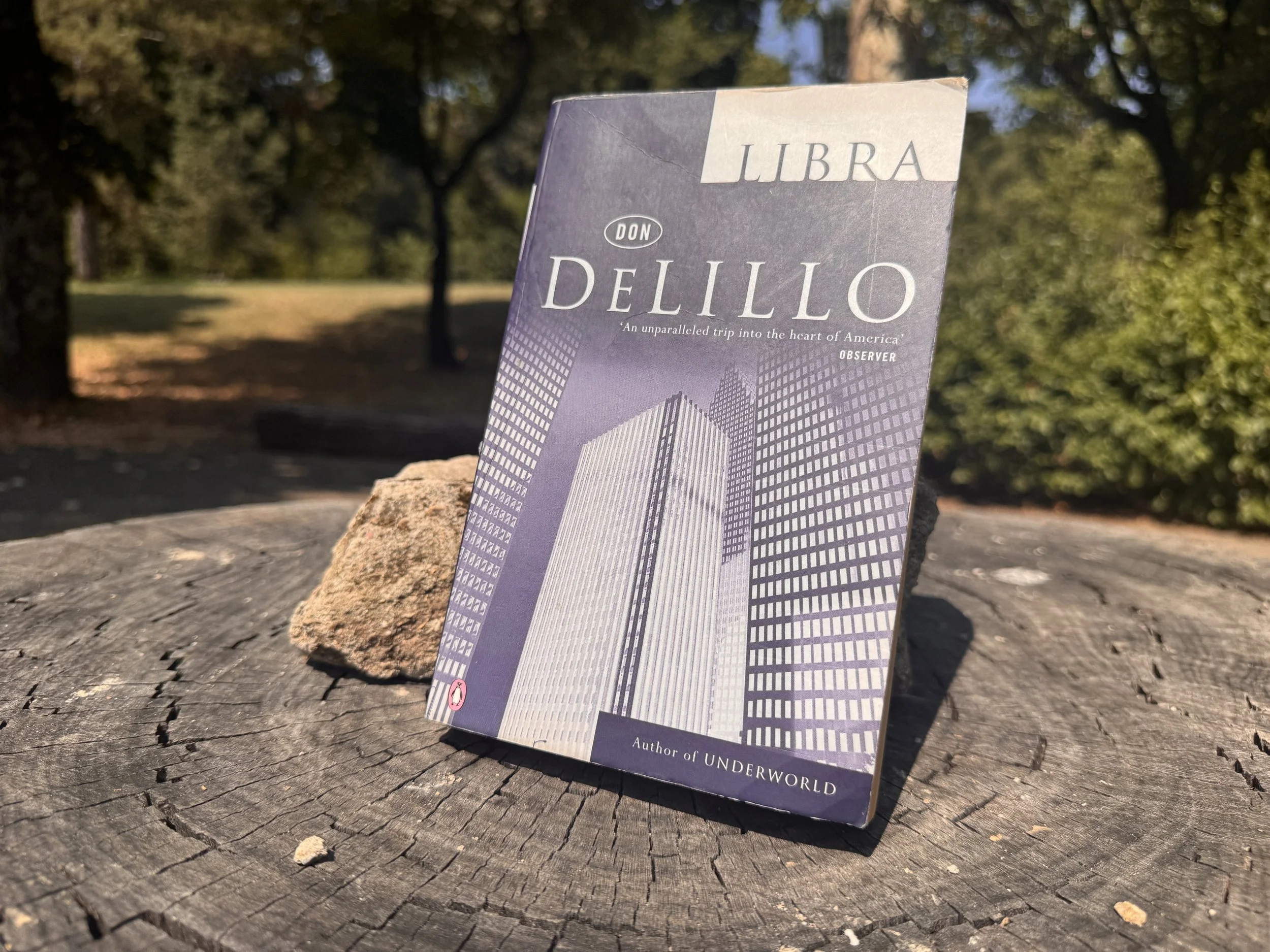
 Image 1 of 2
 Image 2 of 2


Why study Libra?
Libra treats a real historical event as material for serious literary inquiry, blending documented fact with invented interior life in a way that raises direct questions about the limits of historical fiction. DeLillo constructs Oswald as a man shaped by forces larger than himself, and he renders the machinery of Cold War intelligence work with a precision that has made the novel a reference point in discussions of postmodern American fiction.
Its structure, alternating between Oswald's biography and the unfolding plot, gives students a clear model for examining how narrative order shapes meaning. It remains one of the most ambitious literary treatments of the Kennedy assassination.
Download the Unseen Summaries guide to Libra and examine how fiction reconstructs one of America's defining historical ruptures.
Title: Libra
Author: Don DeLillo
Author biography: Don DeLillo is an American novelist born in New York City in 1936. Over a career spanning six decades, he has written novels including White Noise, Underworld, and Mao II, establishing himself as one of the central figures of postwar American fiction. His work is known for its attention to media, conspiracy, and the undercurrents of American public life. Libra, published in 1988, remains one of his most widely studied novels.
Publication date: 1988
Genre: Historical fiction, political fiction
Summary: Libra reconstructs the life of Lee Harvey Oswald alongside a fictionalized account of the conspiracy that culminated in the assassination of President Kennedy. Moving between Oswald's personal history and the intelligence operatives who shape events around him, the novel builds a layered, speculative account of one of the twentieth century's defining moments.