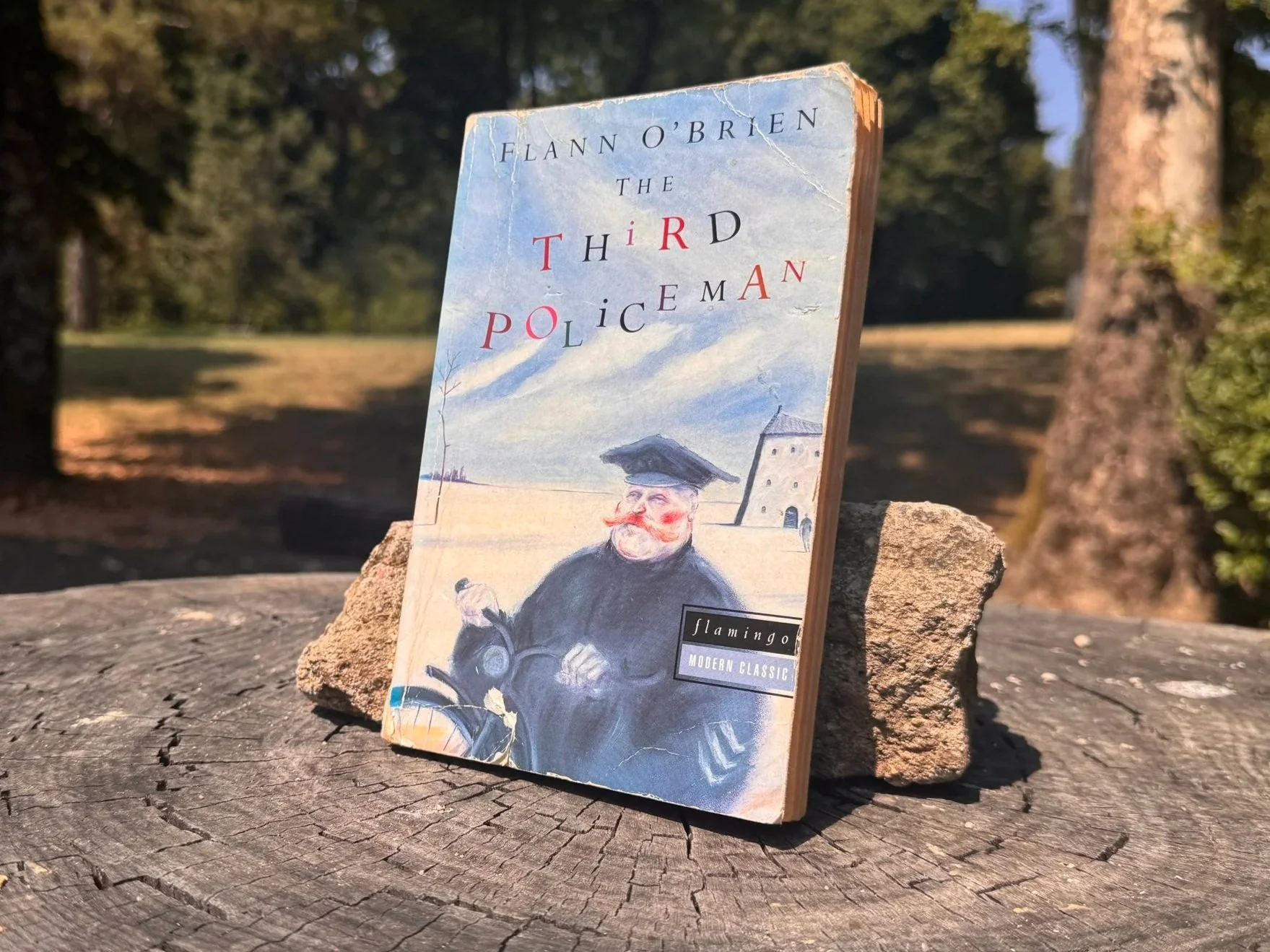
 Image 1 of 2
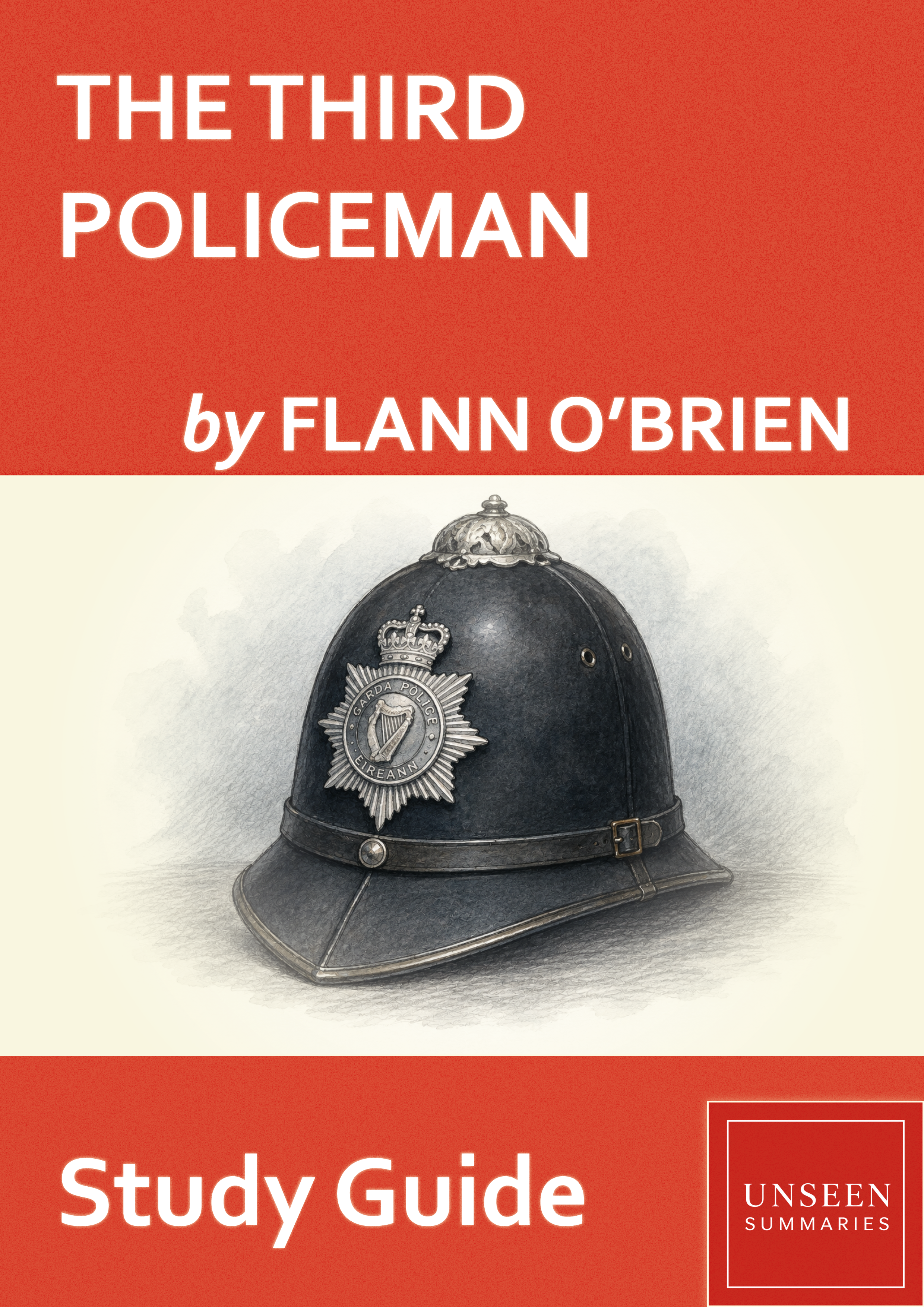 Image 2 of 2
Why study The Third Policeman?
The Third Policeman defies easy classification. It combines detective fiction, philosophical satire, and rural Irish comedy into a structure that anticipates postmodern fiction by decades. O'Brien's invented philosopher de Selby appears throughout in absurd footnotes that parody academic scholarship, turning the novel into a commentary on the act of interpretation itself.
Rejected by publishers during O'Brien's lifetime, the book found its audience only after his death and has since become a touchstone for readers interested in Beckett, Kafka, and metafiction. Its blend of dark comedy and metaphysical dread rewards careful, patient reading, which makes it an ideal candidate for close study.
Download the Unseen Summaries guide to The Third Policeman and work through its logic, its jokes, and its philosophy with a clear, structured companion.
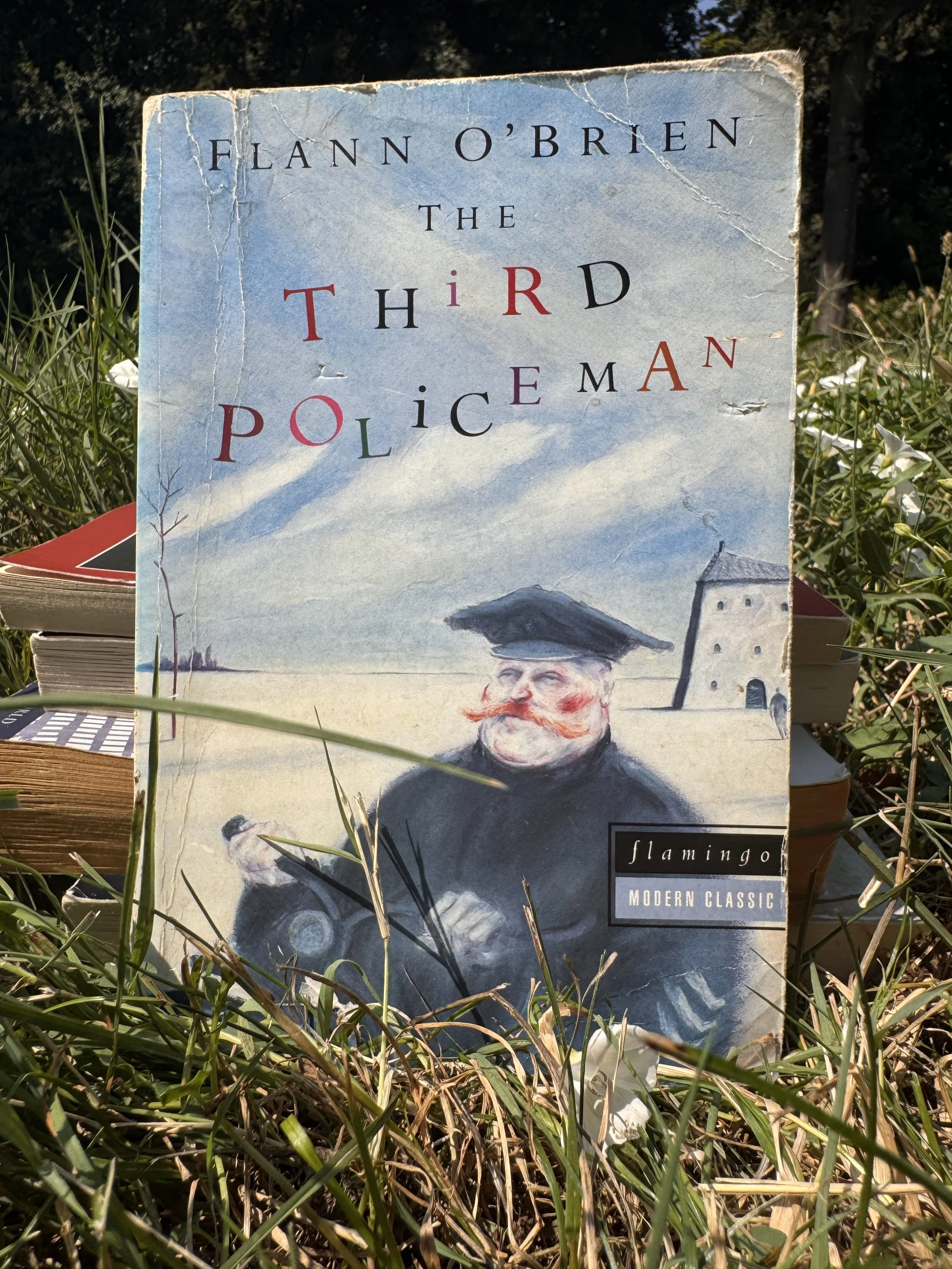
Title: The Third Policeman
Author: Flann O'Brien
Author biography: Flann O'Brien was the pen name of Brian O'Nolan, an Irish novelist born in County Tyrone in 1911. He worked for decades as an Irish civil servant while writing fiction and satirical newspaper columns under multiple pseudonyms. His best known work, At Swim-Two-Birds, established him as one of the most inventive voices in Irish literary modernism. He also wrote The Dalkey Archive and The Poor Mouth. O'Brien died in Dublin in 1966.
Publication date: 1967 (written 1939 to 1940, published posthumously)
Genre: Absurdist fiction, philosophical comedy
Summary: An unnamed narrator murders a man for money and finds himself trapped in a rural Irish parish governed by bizarre policemen obsessed with bicycles, atomic theory, and impossible inventions. As his search for the stolen cash unravels, the novel reveals itself as a nightmarish, comic meditation on identity, time, and the afterlife.